
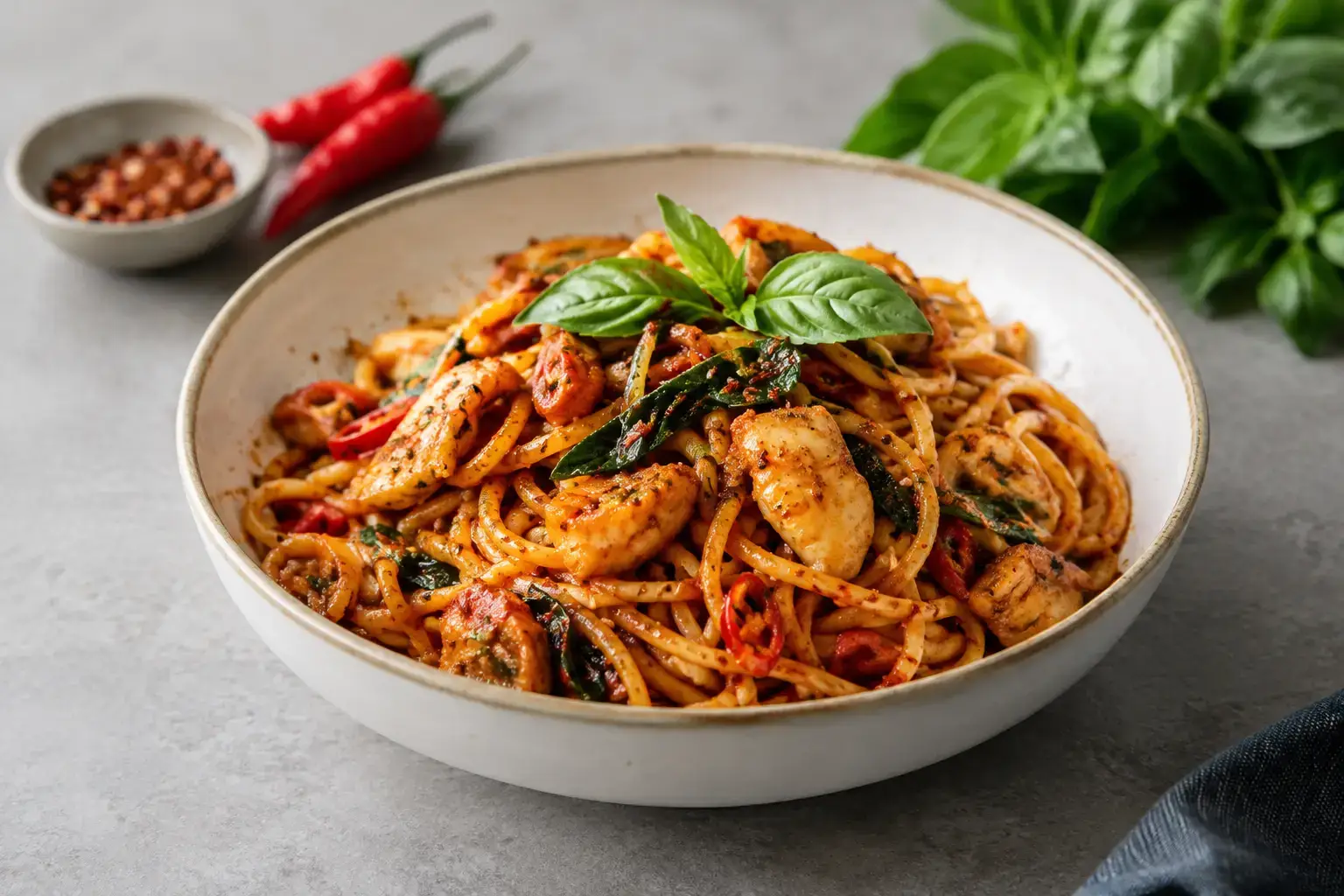
Best Spicy Pasta in Petaling Jaya, With Depth
A good spicy pasta should not hit like a dare. It should build. First, the tomato brightness. Then a savoury pull. Then chilli warmth that stays long enough to matter. That is the difference when you are looking for the best spicy pasta Petaling Jaya has to offer: not the loudest heat, but the kind with a point of view.
Most pasta sauces are made to be fast. Tomatoes, oil, seasoning, perhaps a quick hit of chilli, then straight to the bowl. It works when you need something familiar. But it can leave the heat sitting on top of the sauce rather than inside it. One note. One moment. Gone.
There is another way to make pasta feel bigger. Give the ingredients time.
Best Spicy Pasta in Petaling Jaya Starts Before the Pan
The most memorable spicy pasta does not begin when the pasta drops into boiling water. It begins months earlier, when tomatoes and chilli are allowed to change slowly.
At OOOMAMEE by Bowleh, that wait is 180+ days. Fresh ingredients are fermented until their flavour moves beyond simply sweet, sour or hot. The result is pasta sauce with a clearer identity: tangy, deep, complex and punchy.
This is not heat for heat’s sake. Fermentation gives chilli more dimension, while tomatoes develop a savoury intensity that a quick-cooked sauce cannot fake. The spice feels rounded rather than flat. It arrives with flavour, not instead of flavour.
That matters on a busy weekday, when lunch needs to wake you up without becoming a project. It matters on a late dinner with friends, when a bowl of pasta should give the table something to talk about. And it matters for delivery, where a meal has to travel with its character intact.
180 Days, One Bigger Flavour Story
Time tastes different. Here is what that means in the bowl.
Day 1: Bright and Fresh
At the beginning, tomatoes bring their natural sweetness and clean acidity. Chilli brings its sharp edge. These are recognisable flavours, direct and lively. They are the starting point, not the final answer.
A fresh tomato sauce can be lovely, especially when you want something light. But for spicy pasta, freshness alone can make the chilli feel separate. Tomato on one side. Heat on the other. There is less to hold the two together.
Day 60: Tang Starts to Take Shape
As fermentation progresses, the sauce develops a gentle tang. Not a harsh sourness. More of a lift that cuts through richness and keeps each forkful alive.
This is where a spicy pasta starts to feel less predictable. The tomato is no longer just sweet. The chilli is no longer just hot. Both begin to carry more weight, which is why the sauce can taste full without relying on added flavouring.
For diners who usually find tomato pasta too safe, this is the turn. The flavour becomes sharper in focus, not heavier in the wrong way.
Day 120: Deeper, Darker, More Savoury
Given more time, those bright notes settle into something more layered. The sauce becomes savoury and rounded, with the kind of depth that makes you go back for another bite before you have decided why.
This is the part people often describe as umami. It is real, but it need not be complicated. Think of it as the satisfying, mouth-filling quality that makes the sauce taste complete. Not sugary. Not aggressively salty. Just deeply there.
A sauce at this stage works especially well with pasta because every curve and ridge carries more than a surface coating. You get heat, tang and savouriness in the same mouthful.
Day 180+: Patient Heat
After 180+ days, the chilli becomes patient. It does not need to shout. It lands with the fermented tomato, rises gradually, and leaves a warming finish that invites the next forkful.
That is the standard worth looking for in the best spicy pasta in Petaling Jaya. Heat should have a beginning, a middle and an aftertaste. If it only burns, it has skipped the interesting part.
What Makes Spicy Pasta Worth Ordering?
There is no single correct level of spice. Some diners want a gentle warmth that lets the tomato lead. Others want a proper chilli kick after a long day. The better question is whether the sauce still tastes like food when the heat arrives.
A worthwhile spicy pasta should have three things working together. The tomato needs acidity to keep the bowl from feeling dull. The sauce needs savoury depth so it does not taste like plain pasta with chilli flakes. And the chilli needs control, bringing energy without flattening everything else.
Texture counts too. Pasta gives you a familiar comfort-food format, which makes a bold sauce easier to enjoy. You already know the ritual: twirl, lift, eat. The surprise is in the sauce, where that familiar tomato base has been transformed by time.
This is why spicy pasta works for different appetites. If you want a quick, comforting meal, it gives you pasta. If you want something less generic, it gives you fermentation-led flavour. You do not have to choose between accessible and interesting.
When You Want Heat, Choose Depth
Not every spicy pasta has to be an endurance test. In fact, the best ones are rarely the ones that leave your tongue numb. Extreme heat can be fun once in a while, but it often makes every bite taste the same.
Depth creates a better kind of intensity. You taste the fruitiness of tomato first, then the tang built through fermentation, then the chilli’s warmth. The order can shift with each forkful. That movement is what keeps a simple bowl of pasta from becoming repetitive.
It also makes the meal easier to pair with the rest of your day. A sauce with balanced heat works at lunch, when you still have meetings to face. It works at dinner, when you want comfort without the heaviness of a creamy sauce. It works for a solo order at home, when bland delivery food is simply not an option.
For social meals, it gives everyone a useful talking point without becoming intimidating. One person notices the tang. Another catches the slow-building heat. Someone else goes straight back for more. Good food does not need a lecture. It just needs to give people something worth tasting twice.
A Better Way to Judge Your Next Bowl
When choosing spicy pasta, look past the word “spicy”. Ask what is creating the heat and what is carrying it. Fresh chilli can bring a bright, immediate kick. A sauce built over months can bring a longer story.
If you prefer clean, direct flavours, a lighter chilli pasta may be exactly right. If you want a bowl that feels more layered and more memorable, seek out sauces where tomato and chilli have had time to develop together. Neither choice is wrong. They are simply different cravings.
The difference becomes obvious after the last forkful. A forgettable bowl leaves only heat. A properly made one leaves tang, warmth and that savoury pull that makes you consider ordering it again.
Next time the pasta craving arrives, do not just ask for spice. Ask for a sauce that has waited long enough to earn it. Come taste 180 days.


Comments