
What Gives Food Umami Flavour? The Science
A ripe tomato does not shout. It builds. First, there is brightness. Then sweetness. Then that savoury pull that makes you go back for another forkful before you have quite worked out why. So, what gives food umami flavour? Usually, it is time, transformation and naturally occurring savoury compounds working together.
Umami is the deep, rounded taste that makes food feel fuller and more complete. It is not simply salt. It is not spice, either. Think of a slow-cooked tomato sauce, a spoonful of miso, a mushroom risotto, an aged cheese or a bowl of broth with real depth. The flavour sits low and lingers. It makes familiar food taste less flat.
At OOOMAMEE, that idea starts with tomatoes and chilli, then gives them 180+ days to become something deeper, layered and punchy. No rush. Because time tastes different.
What gives food umami flavour?
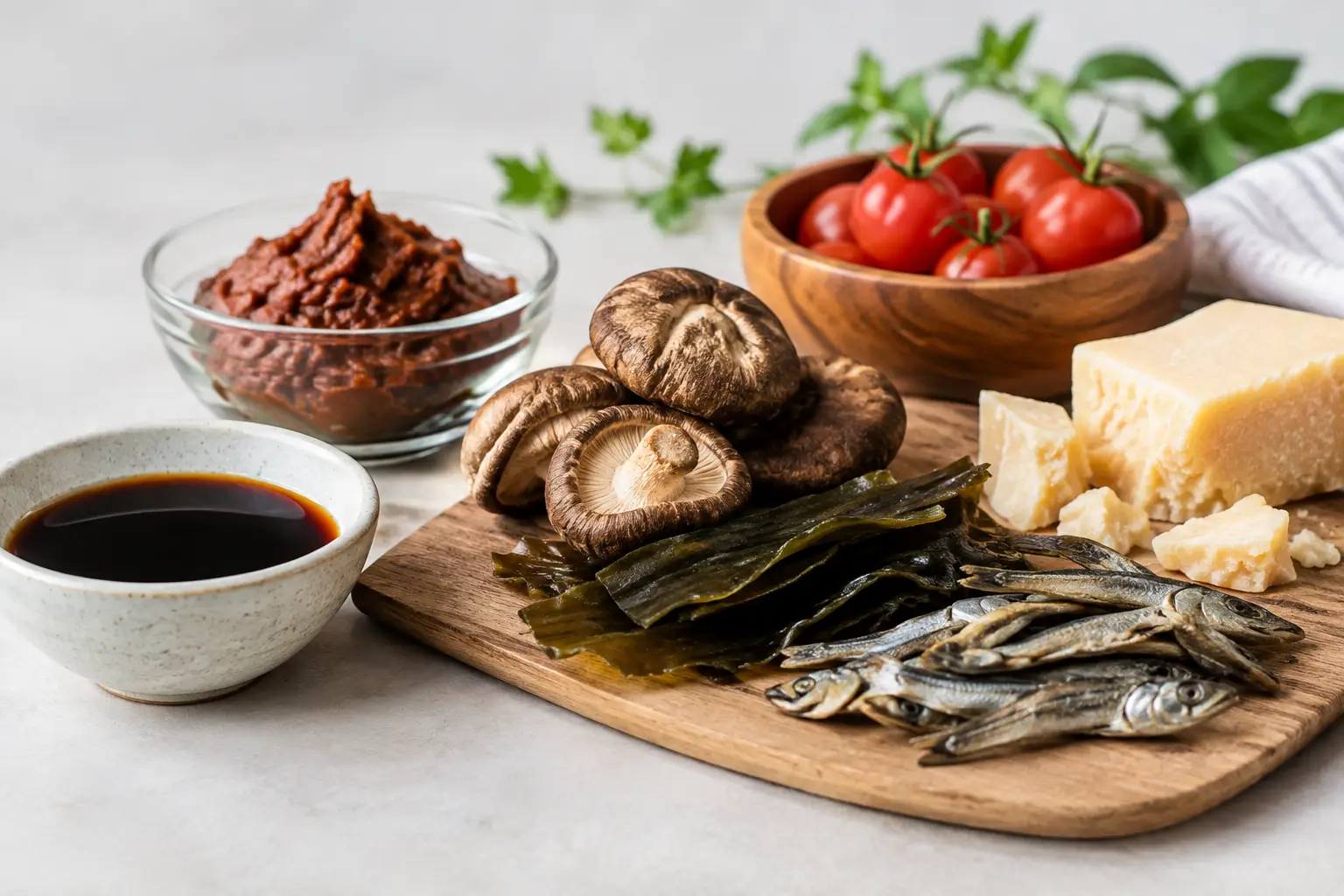
The main driver is glutamate, an amino acid found naturally in many foods. Glutamate is especially present in tomatoes, mushrooms, seaweed, meat, parmesan, soy sauce and fermented foods. When it meets receptors on your tongue, it creates the savoury taste we know as umami.
But the best umami is rarely a one-note thing. Certain natural compounds called nucleotides make glutamate taste even more powerful. They occur in ingredients such as dried mushrooms, cured fish and meat. Put the right ingredients together and the effect is bigger than either ingredient alone. Tomato and cheese. Mushroom and stock. Seaweed and soy. Each pairing creates more depth, not just more flavour.
That is why a good sauce can taste intensely savoury without being aggressively salty. Salt sharpens and carries flavour, but umami gives it body. Acidity wakes it up. Sweetness softens rough edges. Heat brings energy. When those elements are balanced, the food keeps moving across your palate instead of landing in one heavy, blunt note.
Umami is made, not sprinkled on
Some ingredients arrive with plenty of umami already inside them. A sun-ripened tomato contains natural glutamate. Parmesan develops it as it ages. Kombu seaweed is famously rich in it. But cooking, drying, ageing and fermenting can change how those flavours show up.
Heat concentrates a sauce by driving off water. Roasting creates browned, savoury notes. Slow cooking lets ingredients mingle and soften into each other. Fermentation does something different: it changes the ingredient itself. Natural microbes feed, acids develop and complex flavour compounds emerge over time. The result can taste brighter and deeper at once.
That contrast matters. A rich food without acidity can feel dull or cloying. A sharply sour food without depth can feel thin. Fermented tomato brings both directions together: lively tang at the front, savoury weight underneath. Add chilli and there is a patient heat that arrives after the first taste, rather than flattening everything in its path.
This is also why not every umami-rich food tastes the same. Soy sauce is dark, salty and malty. Mushrooms are earthy. Aged cheese is nutty and rounded. Tomatoes are fruity, acidic and savoury. The ingredient decides the character. Time decides how far that character can travel.
180 days: how tomato turns deep, layered and punchy
Fermentation is sometimes talked about as if it is a mystery. It is more useful to think of it as a flavour timeline. An ingredient starts recognisable, then gradually becomes more expressive.
Day 1: bright and sweet
At the beginning, tomato tastes like tomato. It is fresh, juicy and naturally sweet, with clean acidity. Chilli brings its own direct heat and fruitiness. These are flavours with plenty of energy, but not yet much bass.
That fresh character matters. Deep flavour needs a good starting point. If the ingredient has nothing worth preserving, no amount of waiting will turn it into something memorable.
Day 60: tang starts to form
As fermentation progresses, acidity becomes more pronounced. The flavour gets a little sharper and more lively. Sweetness is still there, but it is no longer alone. The tomato begins to taste less like a fresh salad ingredient and more like the beginning of a serious sauce.
This stage is where balance becomes crucial. Too little development and the flavour stays straightforward. Too much unchecked sharpness and it can lose its comfort. The goal is not sourness for its own sake. It is a tang that makes savoury notes feel clearer and more craveable.
Day 120: complexity arrives
Now the flavour has more corners. The fruitiness of tomato starts to sit alongside savoury, savoury-sweet and gently funky notes. Chilli is no longer just a burst of heat. It becomes part of the overall flavour, adding warmth and length.
This is where fermentation earns its place in a bowl of pasta or rice. The food does not need a long speech to feel different. One bite tells you there is more going on than a standard tomato sauce. It has depth, but it still has lift.
Day 180+: umami with a point of view
After 180+ days, the flavour is built rather than boosted. Tomato and chilli become rich, tangy and concentrated, with a savoury finish that stays around. The aim is not to make the food taste ancient or obscure. It is to make a familiar comfort meal taste more alive.
That is the real appeal of long fermentation. It does not turn pasta into a science project or rice into a lecture. It gives everyday formats a bigger flavour story. You get the ease of a bowl you already know, with a finish you are unlikely to forget.
Why umami makes food so craveable
Umami creates satisfaction. It fills the middle of a dish, connecting aroma, salt, sweetness, acidity and heat. Without it, a sauce may taste pleasant but short. With it, the flavour seems to have a longer echo.
There is a practical reason this matters when you are hungry, ordering lunch between meetings or deciding where to eat with friends. Big flavour should not require a fine-dining occasion. A properly developed sauce can make a quick meal feel considered. It gives every mouthful a reason to hold your attention.
Still, more umami is not automatically better. Too much can make a dish feel dense, salty or tiring. The best bowls use contrast. A little freshness against the depth. A clean acidic edge against savoury richness. Heat that builds rather than overwhelms. Umami should make you want another bite, not make every bite taste identical.
Taste for it in your next bowl
If you want to spot umami, look for the lingering savoury finish rather than a single loud flavour. Notice whether the tomato tastes merely sweet and acidic, or whether it has a deeper, almost meaty fullness. Notice whether the chilli has a sharp hit, or a warmth that grows as the sauce settles on your tongue.
You can find umami in your own cooking by pairing ingredients with natural depth: tomatoes with aged cheese, mushrooms with soy, miso with roast vegetables, or a little fermented chilli with a simple rice bowl. Let browning, simmering and resting do some work before reaching for extra seasoning.
The shortcut is often more salt. The better answer is usually more time. Give an ingredient space to change, and it can bring brightness, tang, depth and heat to the same bite. Come taste 180 days.


Comments