
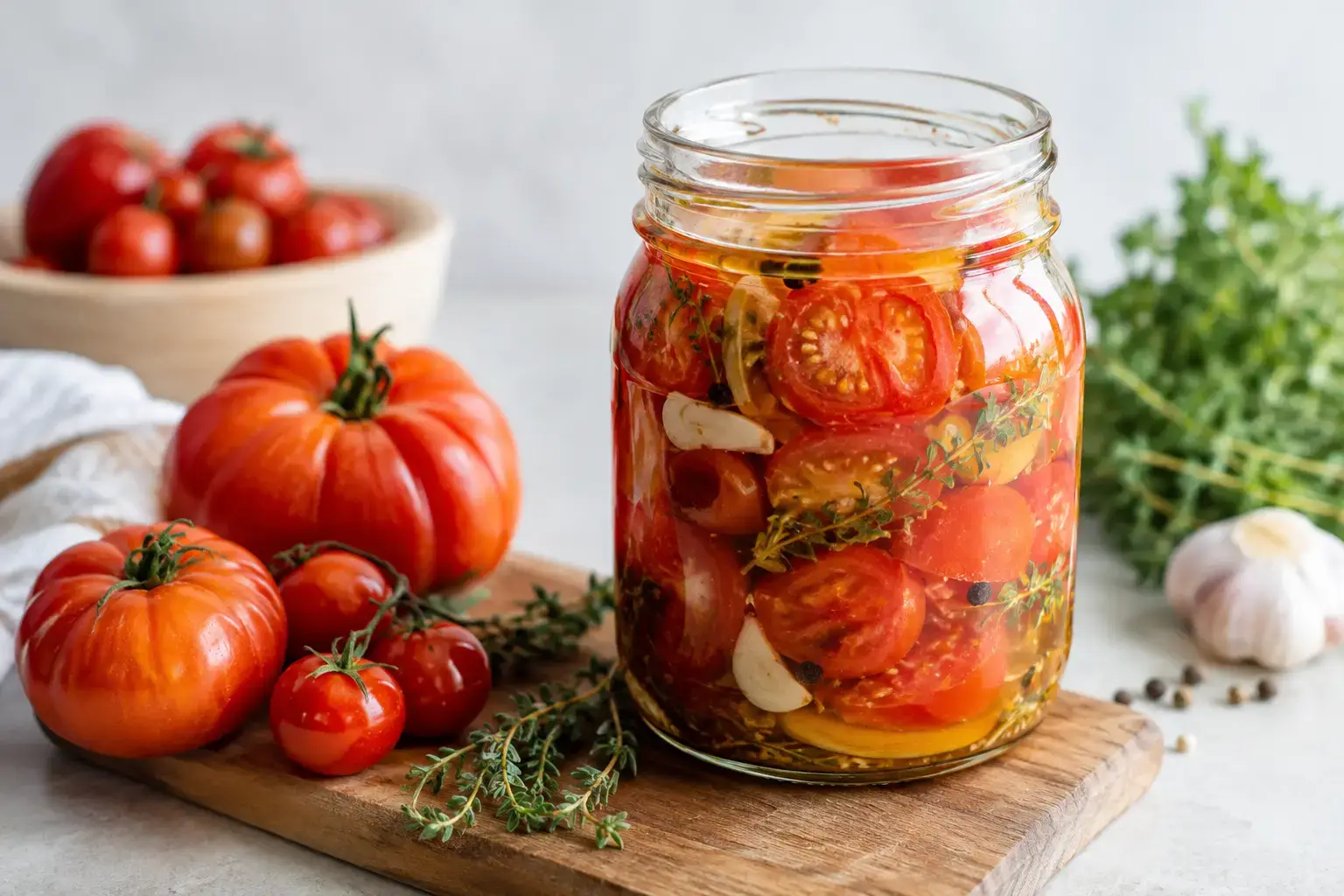
How Fermented Tomatoes Develop Real Depth
A tomato can taste bright, sweet and juicy. Give it 180+ days, and it starts telling a bigger story. That is how fermented tomatoes develop depth: not through a shortcut, not through a heavy hand with added flavour, but through time. The sharp edges soften. The natural sweetness settles. Tang arrives. Then comes that long, savoury finish that makes you pause for another forkful.
This is not tomato sauce turned louder. It is tomato transformed.
At OOOMAMEE, tomatoes and chilli are given the time to move from fresh and familiar to deep, layered and punchy. The result belongs in comfort food, but it does not taste predictable. Pasta feels fuller. Rice bowls carry more weight. Heat does not just hit. It stays, builds and makes room for everything else.
How Fermented Tomatoes Develop Depth Over Time
Fermentation is often explained as a process. We prefer to explain it as a flavour journey. Over months, the character of a tomato changes in stages. Each stage brings something new to the final dish.
Day 1: Bright, Sweet, Alive
At the beginning, tomatoes bring their familiar qualities: freshness, natural sweetness and a clean acidity. Chilli brings its own bright, green energy and immediate warmth.
These early flavours matter. They are the starting point for everything that follows. Without good tomatoes and chilli, there is nothing worth waiting for. But at this stage, the flavour is direct. It is lively, simple and quick.
Think of a freshly cut tomato with salt. Delicious, yes. Deep? Not yet.
Day 60: Tang Starts Taking Shape
As the weeks pass, fermentation begins changing the balance. The tomato’s sweetness becomes less obvious, while its acidity grows more rounded and purposeful. This is where the tang starts to earn its place.
Tang is not the same as sourness. Sourness can feel one-note. Tang has movement. It lifts rich food, keeps a sauce from feeling flat and gives every bite a little pull.
For pasta and rice, this matters. A deeply savoury dish needs contrast or it can become heavy. Fermented tomato brings that contrast from within the ingredient itself. You get body and brightness in the same spoonful.
Day 120: The Middle Gets Bigger
By this point, the flavour is no longer simply tomato plus chilli. The ingredients have had time to mingle, settle and become something more connected. The fresh notes do not disappear completely, but they sit further back. In front comes a richer savouriness, with a gentle funk and a fuller aroma.
This is the stage where people often use the word umami. It is a useful word, but the feeling is easier to recognise than to define. It is that mouth-filling savoury quality that makes a dish taste complete. It is why a sauce can feel rich without relying on cream, and why a bowl can taste satisfying before you have even finished it.
The chilli changes too. Instead of a quick spike of heat, it starts to feel more woven through the flavour. You still notice it. You should. But it is no longer shouting over the tomato.
Why 180+ Days Taste Different
Time is the ingredient that cannot be sprinkled on at the end.
A quick tomato sauce can be excellent when you want freshness. A long-fermented tomato base offers something else: layers that reveal themselves at different moments. First you taste tang. Then sweetness. Then savoury depth. Then the chilli returns, warm and patient.
That sequence is what makes a meal memorable. Your first bite gets your attention. Your next few bites keep changing. By the end, you are not reaching for more because the dish is merely salty, sweet or hot. You are reaching for more because it has range.
At 180+ days, the flavour has had enough time to become concentrated in character, not just intense in volume. That distinction matters. More chilli can make food hotter. More seasoning can make it louder. More time can make it deeper.
We give it time. We do not add flavour.
Fermented Does Not Mean Overpowering
Some diners hear “fermented” and expect something aggressively sharp or unfamiliar. Fair question. Fermentation can be bold, and it is not meant to disappear into the background. But deep flavour is not the same as extreme flavour.
A well-balanced fermented tomato should still taste like tomato. Its fruitiness remains, just matured. Its acidity becomes more layered. Its savouriness becomes more present. The chilli brings warmth with a longer finish, rather than flattening the whole dish into pure heat.
It depends on what you want from a meal. If you are after a very mild, plain tomato sauce, fermentation may feel like a bigger flavour step. If you enjoy sambal, kimchi, aged cheese, sourdough or a proper spicy noodle bowl, the appeal will make immediate sense. You already know what time can do.
The trade-off is simple. A 180-day fermentation demands patience, care and consistency. It cannot be rushed to fit a last-minute craving. But when it lands in a bowl, it gives a familiar format a flavour profile that standard sauces cannot easily copy.
What That Depth Does to Pasta and Rice
Pasta is often treated as a blank canvas, but it has its own gentle wheatiness and chew. A fermented tomato sauce gives it something with enough pull to hold the bite together. The tang cuts through richness, while the umami clings to every curve and strand. The chilli arrives after, keeping the finish awake.
With rice, the effect is different. Rice is comforting, soft and quietly absorbent. It carries the sauce, catching its tangy, savoury juices in every grain. That makes fermented tomato especially good for a fast meal that still feels considered. You get ease without dullness.
This is why fermentation belongs in everyday food, not only in tiny tasting portions or chef-led experiments. A deeply flavoured sauce can meet you where you are: a quick lunch between meetings, dinner after class, a delivery order when you want more than the usual. Familiar food. Bigger flavour.
The Difference Is in the Finish
The best test of depth is not the first taste. It is what remains after it.
A flat sauce disappears quickly. A one-dimensional hot sauce leaves only heat. Fermented tomatoes leave a trail: gentle sweetness, settled tang, savoury richness and chilli that warms rather than overwhelms. The finish is long, but not tiring.
That is also why the food feels punchy without becoming chaotic. Every flavour has a role. Tomato provides the foundation. Fermentation builds dimension. Chilli gives the ending its pace.
You do not need to memorise the process to enjoy it. Just notice what happens when the first forkful becomes the second, then the third. A meal built on time asks for your attention without asking for effort.
Next time a tomato dish tastes deeper than you expected, give it a moment. The answer may not be a secret ingredient. It may simply be that someone waited.


Comments