
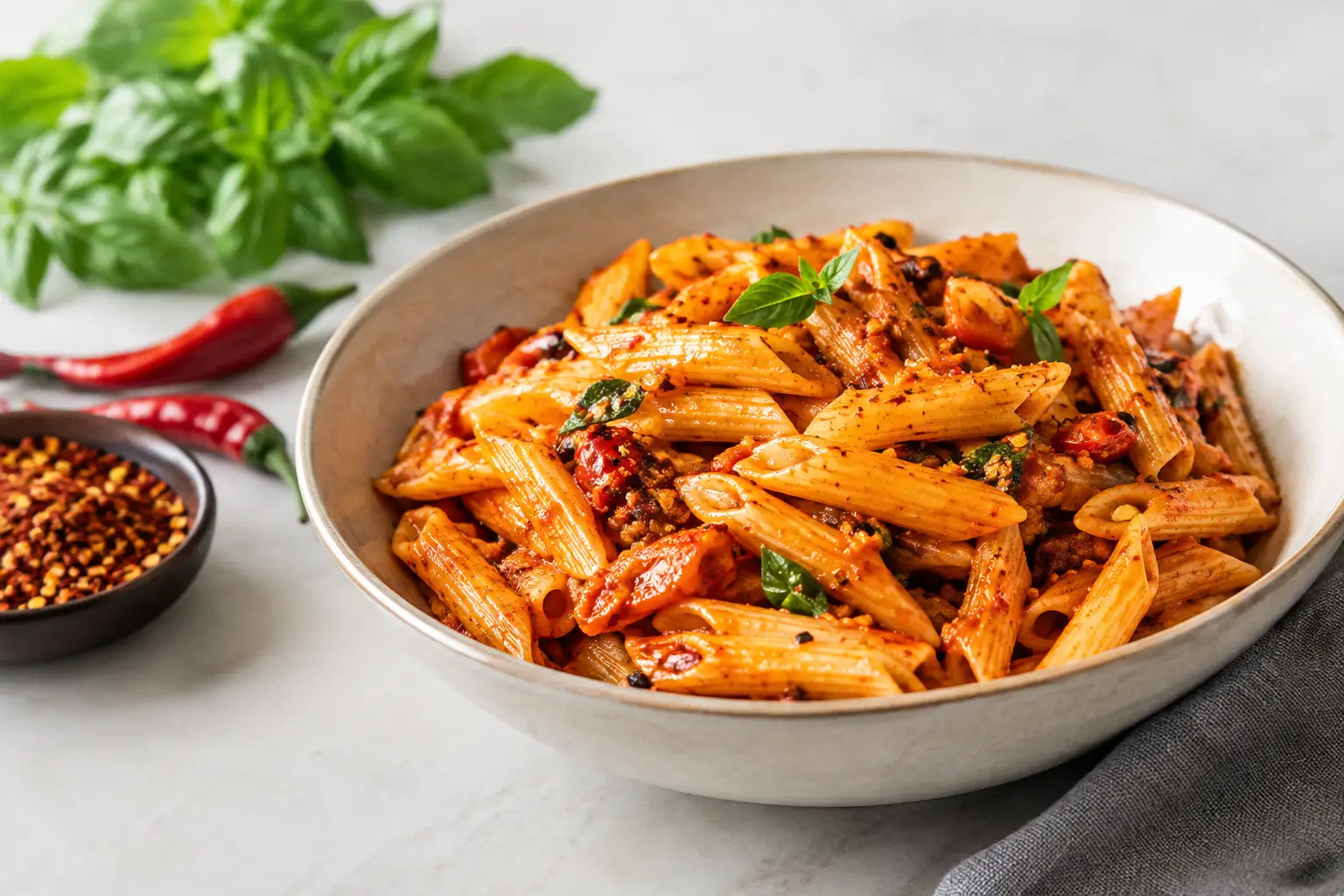
How to Choose Spicy Pasta That Tastes Deep
A good spicy pasta should make you reach for another forkful, not a glass of water. That is the real answer to how to choose spicy pasta: look beyond the chilli hit. The bowl worth ordering has heat, yes, but it also has tang, savoury depth and enough body to carry every strand of pasta.
Some sauces arrive red, glossy and loud, then disappear after the burn. Others build slowly. First comes tomato brightness. Then a deeper savoury note. The warmth follows, settles in, and keeps the next bite interesting. Choose the second kind.
Choose Your Heat, Then Choose Your Flavour
Heat is personal. One diner's pleasant buzz is another diner's full emergency. But choosing spicy pasta is not only about picking mild, medium or hot. It is about deciding what you want the chilli to do.
If you want a quick, clean kick, choose a sauce where fresh chilli is upfront. It is bright, sharp and immediate. This can be brilliant with light pasta dishes, especially when garlic, olive oil or seafood are doing most of the supporting work. The trade-off is that fresh heat can feel narrow if the sauce has little sweetness, acidity or savoury weight behind it.
If you want warmth that stays with you, look for a sauce with a slower build. Cooked, roasted or fermented chilli tends to feel rounder. It does not necessarily mean less spicy. It means the heat has somewhere to go. Tomato, onion, garlic and umami give it shape, so the spice lingers rather than simply attacks.
For a first order, choose the level you can comfortably enjoy and focus on the sauce style. A medium bowl with deep flavour is usually more satisfying than an extra-hot bowl that flattens everything else on the plate. You can always go hotter next time. You cannot rewind a sauce that has turned dinner into a dare.
Read the Sauce Before You Order
Menu descriptions tell you more than they seem to. Words such as fresh, zesty and fiery usually signal a lively, direct style of heat. Rich, slow-cooked, roasted, aged and fermented suggest more depth. Neither is automatically better. The right choice depends on whether you are after a flash of fire or a fuller flavour journey.
Tomato matters especially. Its natural acidity can keep a spicy sauce fresh rather than heavy. When that tomato flavour is allowed time to develop, it gains sweetness, tang and a darker savoury character. The chilli becomes part of the sauce instead of sitting on top of it.
At OOOMAMEE, tomatoes and chilli are given 180+ days to change from bright and sweet into something deeper, layered and punchy. That long wait is not decoration for a menu story. It is what gives the heat a tangy, umami-rich base. Time tastes different.
Creamy spicy pasta needs a slightly different read. Cream, cheese or butter can soften heat and create a comforting mouthfeel, but they can also mute a weak sauce. Choose it when you want chilli to feel rounded and plush. Choose tomato-forward pasta when you want the brightness and complexity of the sauce to lead.
How to Choose Spicy Pasta by Texture
The pasta shape changes the experience more than most people expect. Thin strands work beautifully with smoother sauces because each bite gets an even coating. Long pasta makes a slow-building chilli sauce feel elegant and continuous, especially if the sauce clings rather than pools at the bottom of the bowl.
Ridged tubes and twists are better when the sauce has texture - minced ingredients, chilli pieces, vegetables or a thicker tomato base. Their grooves catch the good bits. A chunkier spicy sauce with delicate pasta can feel mismatched; a smooth sauce with a heavy shape can feel like too much starch and not enough lift.
Do not ignore the sauce-to-pasta ratio. Spicy food grows more intense as you keep eating it. A generous coating is good. A flooded bowl can become tiring, particularly when the chilli is powerful. The best plates leave enough sauce to carry flavour through the final bite without turning the pasta soft or soupy.
Look for Balance, Not a Scoville Stunt
The most memorable spicy pasta has contrast. Chilli needs sweetness to keep it friendly, acidity to keep it awake, salt to make it savoury, and umami to make it linger. When one element is missing, you notice.
Too much sweetness can make the sauce taste like bottled chilli ketchup. Too much acid can turn it harsh. Too much salt makes the heat seem louder but less interesting. And when there is no savoury backbone, the burn may be dramatic for ten seconds and forgettable by dessert.
A balanced sauce often moves in stages. Think of it like this:
First bite: tomato, garlic or a bright tang wakes up the palate.
Middle: chilli arrives and spreads with the sauce rather than sitting in one hot spot.
Finish: savoury depth remains, making you want another mouthful.
Aftertaste: warmth stays clean, not bitter, oily or aggressively sweet.
This is why a sauce made with patient fermentation can feel so different from one that relies on extra seasoning. Fermentation gives tomato and chilli time to become more than their starting notes. The result is not merely hotter. It is more complete.
Think About What You Are Eating With It
Spicy pasta rarely lives alone. If you are sharing starters, ordering a side or adding a drink, make choices that support the bowl instead of competing with it.
A crisp, fresh side works well with rich or deeply savoury pasta because it resets the palate. Something fried or heavily cheesy can be delicious, but paired with a creamy hot sauce, it may make the meal feel dense halfway through. If your pasta is sharp and tomato-led, a richer side can provide a welcome counterpoint.
For drinks, cold still water is the sensible default, but it will not reduce chilli heat as much as people think. A milky or creamy drink can soften the sensation, while sweet fizzy drinks may make a fiery sauce feel even more intense for some people. Order based on pleasure, not panic. If you love heat, let it stay present.
Sharing also changes what to choose. A group with mixed spice confidence is better off ordering one gentle, deep-flavoured pasta and one bolder option than making every bowl extra hot. You get contrast, conversation and a much better chance that everyone leaves happy.
Ask One Useful Question
When the menu gives you a choice of spice level, ask yourself: do I want this to be the main event, or the flavour that lifts everything else?
Make chilli the main event when you already know you enjoy serious heat and the sauce has enough depth to carry it. Let it lift everything else when you want to taste the tomato, pasta and savoury notes clearly. There is no prize for ordering the hottest option. The prize is finishing the bowl and thinking about it on the way home.
If you are ordering delivery in Petaling Jaya or Kuala Lumpur, this question matters even more. Heat can intensify as a saucy dish rests in its container, while pasta can keep absorbing sauce. A medium-hot, flavour-first choice usually travels better than a dish ordered at the edge of your tolerance.
Trust the Second Bite
The first bite tells you whether the pasta is spicy. The second tells you whether it is good. By then, the initial chilli shock has passed and the sauce has had a chance to speak.
Choose a bowl with a little patience built into it: tomatoes with tang, chilli with purpose, pasta with the right grip, and heat that keeps opening up instead of shutting everything down. Start where your comfort level sits, then follow the flavour deeper. That is how a spicy pasta becomes more than a hot meal. It becomes the one you want again tomorrow.


Comments