
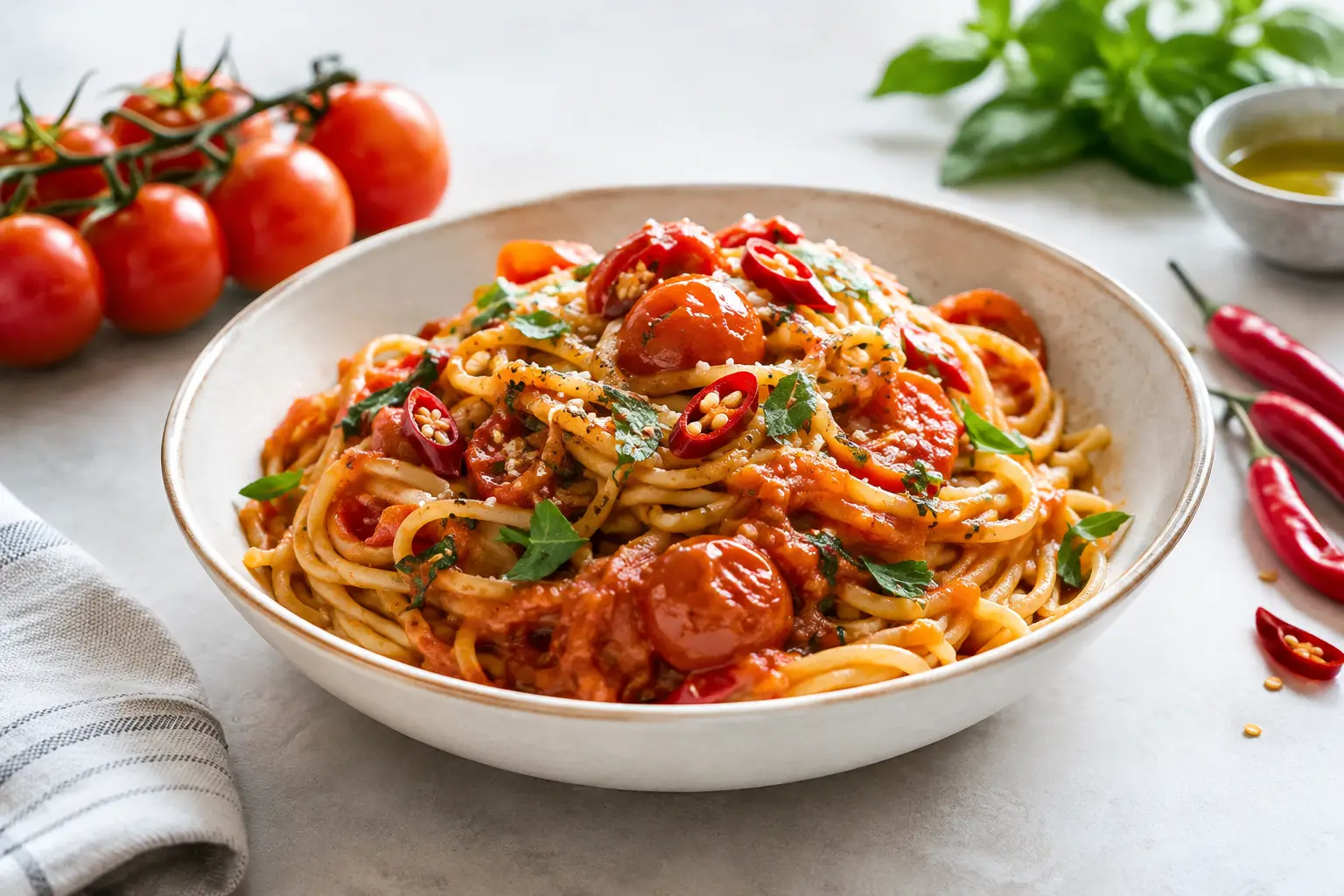
Tomato and Chilli Pasta That Tastes of Time
A good tomato and chilli pasta should not taste like tomato sauce with a few chilli flakes thrown in at the end. It should arrive bright, tangy, warm and deeply savoury - the kind of bowl that keeps changing as you eat it. First the tomato. Then the heat. Then the depth that makes you take another forkful before you have worked out exactly why.
That depth does not come from piling on extra seasoning. It comes from time.
Why tomato and chilli pasta needs more than heat
Tomato and chilli are familiar partners. Tomato brings sweetness, acidity and body. Chilli brings a flash of heat and a little danger. Put them together quickly and you get a perfectly decent pasta sauce. But it can be one-note: sweet, spicy, finished.
Give those ingredients time to ferment, and the flavour starts to move differently. The sharp freshness of tomato becomes rounder and more savoury. Chilli stops being only a loud hit of heat and becomes warmer, slower and more integrated. The sauce tastes deeper without becoming heavy.
That is the point of a proper tomato and chilli pasta. Not to make the chilli unbearable. Not to bury the tomato under cheese, cream or sugar. The goal is balance with attitude: tang up front, patient heat through the middle, umami lingering after the last bite.
It is comfort food, but with something to say.
Come taste 180 days
At OOOMAMEE, tomatoes and chilli are fermented for 180+ days before they become pasta and rice dishes. The process is not a decorative detail on the menu. It is the flavour.
Fermentation is often talked about as though it needs a science lesson. Here is the part that matters at the table: time changes the taste. It takes ingredients that begin bright and sweet, then builds them into something deep, layered and punchy.
Day 1: Bright, fresh, full of possibility
At the beginning, tomato is clean and juicy. Chilli is sharp and direct. You can taste their separate personalities clearly - fruity tomato, lively heat, a little natural sweetness.
There is nothing wrong with that flavour. It is the flavour most quick tomato sauces chase. But it is only the starting point.
Day 60: The tang starts to speak
As the fermentation develops, the ingredients gain a more pronounced tang. The tomato loses some of its simple sweetness and starts to feel more focused. The chilli becomes less abrupt.
This is where a sauce begins to earn its place on pasta. Tang cuts through the richness of a bowl. It wakes up the palate. It keeps every forkful from feeling flat.
Day 120: More depth, less noise
By this stage, the flavours are no longer sitting beside one another. They are becoming one thing. Tomato, chilli and fermentation begin to create savoury notes that are difficult to get from a quick cook alone.
The heat is still there, but it does not need to shout. It has a longer finish. The tomato feels fuller. The whole sauce carries more weight, even when it is not overly thick or oily.
Day 180+: Deep, layered and punchy
This is when the flavour becomes unmistakable. You get brightness, but not rawness. Heat, but not just heat. Savouriness, but not a sauce that feels dark or dense.
It is a tension worth chasing: familiar pasta made unfamiliar in the best way. The kind of flavour that feels immediate, then keeps unfolding.
We give it time. We do not add flavour.
What that time tastes like in a bowl
The best way to understand fermentation-led pasta is not to picture a jar on a shelf. Picture the first forkful.
The sauce clings to the pasta with enough body to coat it, but it should not feel claggy. The tomato lands first, vivid and acidic. Then comes the chilli, building rather than attacking. Finally, there is the savoury pull underneath it all - a long, mouth-watering finish that makes plain tomato sauce taste slightly unfinished afterwards.
That is umami in its most useful form. Not an ingredient you need to name while eating, but a feeling of completeness. The sauce tastes more like itself.
There is also a reason pasta is such a good vehicle for this flavour. Pasta has a mild, wheaty character that gives a fermented sauce room to perform. It holds the tang. It softens the edges of the heat. It turns a complex condiment into a meal that feels generous and satisfying.
Rice works differently, absorbing the sauce and carrying the heat in a softer, more direct way. Pasta gives you more contrast. Each strand or shape creates little pockets of sauce, so the flavour comes in waves.
Is it spicy? Yes. Is it only spicy? No.
For some people, chilli is a challenge. For others, it is non-negotiable. A well-made tomato and chilli pasta has room for both, because the heat is part of the flavour structure rather than the entire point.
If you want a dish that makes your eyes water from the first bite, this may feel more measured than expected. The chilli here is patient. It builds as you eat, warmed by the tang of tomato and grounded by fermentation.
If you usually avoid spicy pasta, it depends on what puts you off. If harsh, peppery heat is the problem, a slow-developed chilli profile can feel more rounded and enjoyable. If you prefer no heat at all, tomato and chilli pasta will still announce itself. It should. Chilli is not a garnish in this bowl.
The trade-off is simple: complexity asks for attention. This is not a bland red sauce built to please everyone at once. It is for people who want their comfort food to have contrast, character and a proper finish.
Not your standard red sauce
A standard tomato pasta sauce often relies on speed and familiarity. Cook the tomato, balance the acidity, add seasoning, finish with herbs, and dinner is ready. That has its place. A weekday plate of pasta does not always need a 180-day backstory.
But there are days when familiar is not enough. When you want lunch between meetings, dinner after class or an easy delivery night to feel like more than a predictable bowl. That is where fermentation changes the equation.
It gives the sauce a point of view. The flavour does not depend on a big list of additions because the ingredients have been allowed to transform. The result feels crafted without becoming fussy, intense without becoming inaccessible.
For diners in Petaling Jaya and across Kuala Lumpur, that matters. There are plenty of fast meals. There are plenty of pasta bowls. A tomato and chilli pasta built around time offers a different reason to choose one: it tastes like someone waited.
The forkful that keeps you coming back
The real test is not whether you can identify every note. It is whether the bowl stays interesting from the first mouthful to the last.
A great fermented tomato and chilli pasta does. Its tang keeps the sauce lively. Its heat keeps it moving. Its depth makes it satisfying enough to crave again. You do not have to understand the process to enjoy it, but once you taste what 180+ days can do, the quick version is hard to forget.
Take your time with the first forkful. The pasta already has.


Comments