
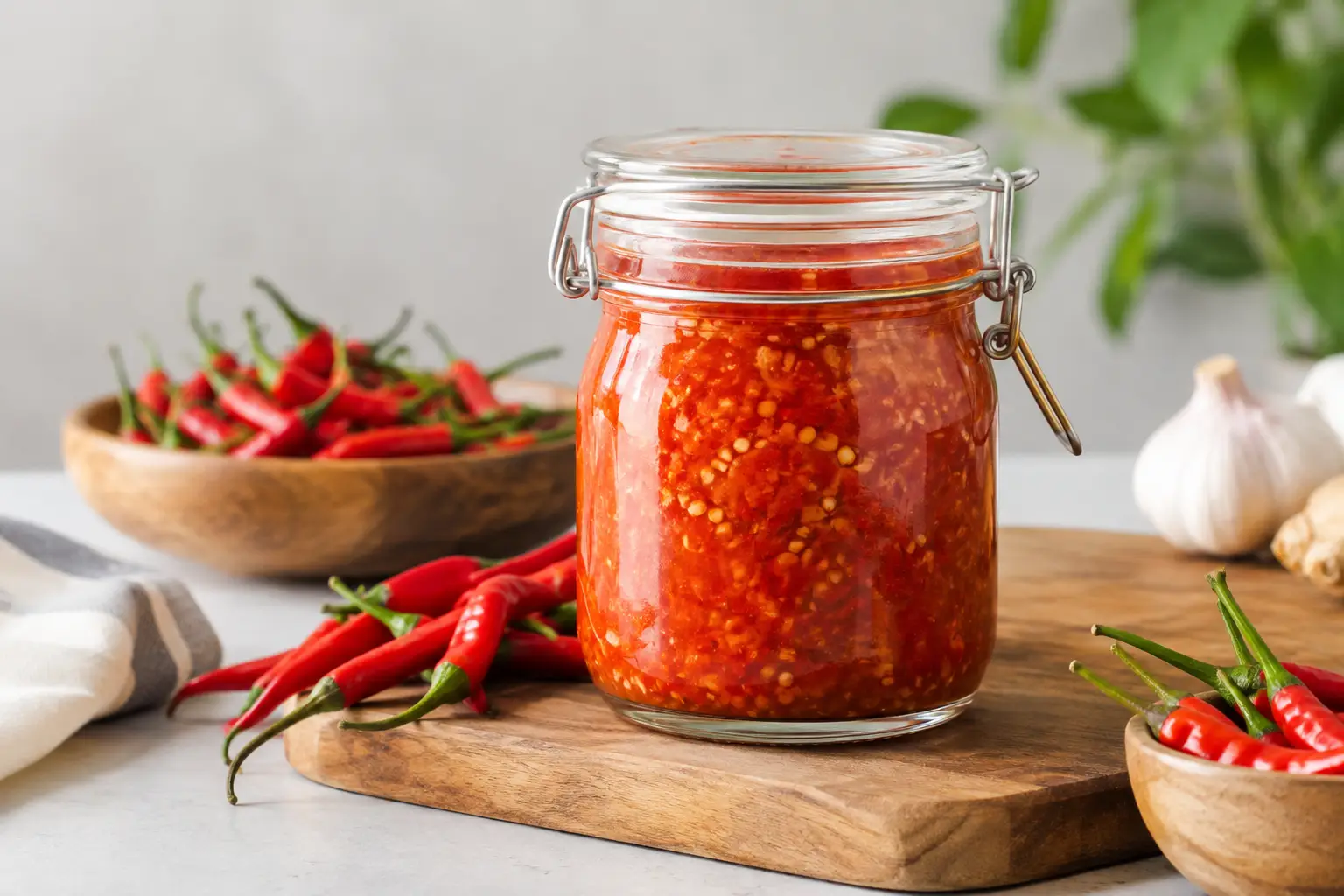
Fermented Chilli Sauce Takes Time to Taste
A quick splash of fermented chilli sauce can wake up a meal. But the good stuff does more than bring heat. It brings tang. Depth. A savoury edge that stays on the palate long after the first bite.
That difference is time. Fresh chilli is bright, sharp and immediate. Fermented chilli changes slowly, becoming rounder, deeper and more expressive. It still has a kick, of course. But it is no longer only about the burn.
At OOOMAMEE, time is the point. Tomatoes and chilli are given 180+ days to move from fresh and sweet to deep, layered and punchy. The result is built for proper meals, not just a last-minute drizzle.
What fermented chilli sauce actually tastes like
A standard chilli sauce often leads with one clear note: sweetness, vinegar, garlic or heat. That can work when you want a fast hit. But it can also flatten a dish, especially when the sauce is doing all the talking.
Fermented chilli sauce has more range. The natural changes that happen over time soften the raw edges of the chilli and build a lively sourness. There is heat, but it arrives with a fuller flavour underneath it. Think ripe fruit, a gentle tang and a savoury finish that makes you want another forkful.
This is why fermentation suits comfort food so well. Pasta, rice and rich proteins need contrast, not just more salt or more spice. A carefully fermented sauce cuts through richness while adding body of its own. It makes a creamy bite feel less heavy. It makes a tomato-based bowl taste less obvious. It gives plain rice somewhere to go.
The exact flavour depends on the chillies, the tomatoes, the salt level and, above all, the time allowed. There is no shortcut that recreates a sauce that has been left to develop for months. Added flavour can imitate a note. It cannot replace the journey.
180+ days of flavour, one stage at a time
Fermentation is not a switch. It is a progression. Each stage has its own character, and each one leaves something behind in the final sauce.
Day 1: Bright, fresh, full of possibility
At the beginning, tomatoes bring their natural sweetness and chillies bring their clean, green or fruity heat. The flavour is lively but direct. You can taste every ingredient clearly.
There is nothing wrong with fresh chilli. Freshness has its place. But it tends to sit on top of a dish, announcing itself immediately. It has not yet had the time to settle, mingle or deepen.
Day 60: Tang begins to show up
As the fermentation develops, the flavour starts to shift. The sharpness changes shape. A light tang appears, giving the sauce lift without the hard, one-dimensional bite that too much vinegar can bring.
This is where chilli becomes more than heat. It begins to feel integrated. Instead of a separate spicy layer, it starts to travel through the tomato and whatever it is cooked with.
Day 120: More savoury, more rounded
By this point, the sauce has more presence. The sweetness is less front-and-centre. The savoury notes begin to build, making the flavour feel broader and more complete.
This is the stage that makes people pause after the first mouthful. Not because the food is aggressively hot, but because there is more happening than expected. Tang first. Then tomato. Then chilli. Then that deep, lingering finish.
Day 180+: Deep, layered and punchy
After 180+ days, the sauce earns its place at the centre of a dish. The flavours have had time to come together without becoming dull. There is still brightness. There is still heat. But both now carry weight.
That is the OOOMAMEE difference. We give it time. We do not add flavour. The fermentation creates a sauce with enough character to lift pasta and rice, while leaving room for the rest of the meal to taste like itself.
Why this sauce belongs beyond the side dish
Many people think of chilli sauce as a condiment - something for the edge of the plate, used carefully, maybe only when a meal needs rescuing. A long-fermented chilli sauce can do more.
Folded through pasta, it brings acidity and savoury depth to every strand rather than delivering spice in random bursts. It works particularly well with rich cheeses, roasted vegetables and slow-cooked meats because its tang keeps the dish moving. The heat is present, but it is part of the flavour architecture.
With rice, the effect is just as useful. Rice has a quietness that welcomes bold flavours, but it can easily become heavy when paired with rich gravies or fried elements. Fermented chilli brings contrast. It brightens a bowl without turning it into a challenge.
It also makes sense in a fast-casual meal. You do not need a tasting menu or a table covered in tiny plates to notice the difference. A good sauce changes familiar food quickly. One bite of pasta. One spoonful of rice. Suddenly, the meal has more shape.
Heat is only one part of the story
There is a misconception that fermented chilli sauce must be ferociously hot. It depends on the chillies used, the batch and how the sauce is used in the final dish. Fermentation does not erase heat, but it can make it feel less jagged.
That matters for people who love flavour but do not want every meal to become a heat test. A deeper chilli sauce offers more ways in. You might notice the tomato tang before the spice arrives. You might get warmth at the end rather than an instant blast. You may find yourself eating more chilli than usual because the flavour is pulling you back.
For serious spice lovers, that layered quality matters too. Pure heat has a ceiling. Once the mouth is overwhelmed, the rest of the dish disappears. A sauce with depth lets the heat last without making everything else vanish.
The difference you can taste in a bowl
The best proof is not a lecture about fermentation. It is the moment a familiar pasta or rice bowl tastes bigger than it looks.
You get the comfort first: warm carbs, sauce, something satisfying. Then the fermented chilli starts working. It sharpens the tomato. It deepens the savoury notes. It leaves a patient warmth that does not rush out of the room. The meal feels complete rather than merely spicy.
This is why time matters more than theatre. A sauce can have a dramatic label, an extreme heat score or a loud colour. None of that guarantees flavour. Months of careful fermentation give ingredients the chance to become something they could not be on day one.
Next time you want chilli, look for more than the burn. Look for tang that makes your mouth water, depth that holds up through the last bite, and heat with somewhere interesting to go. Come taste 180 days.


Comments