
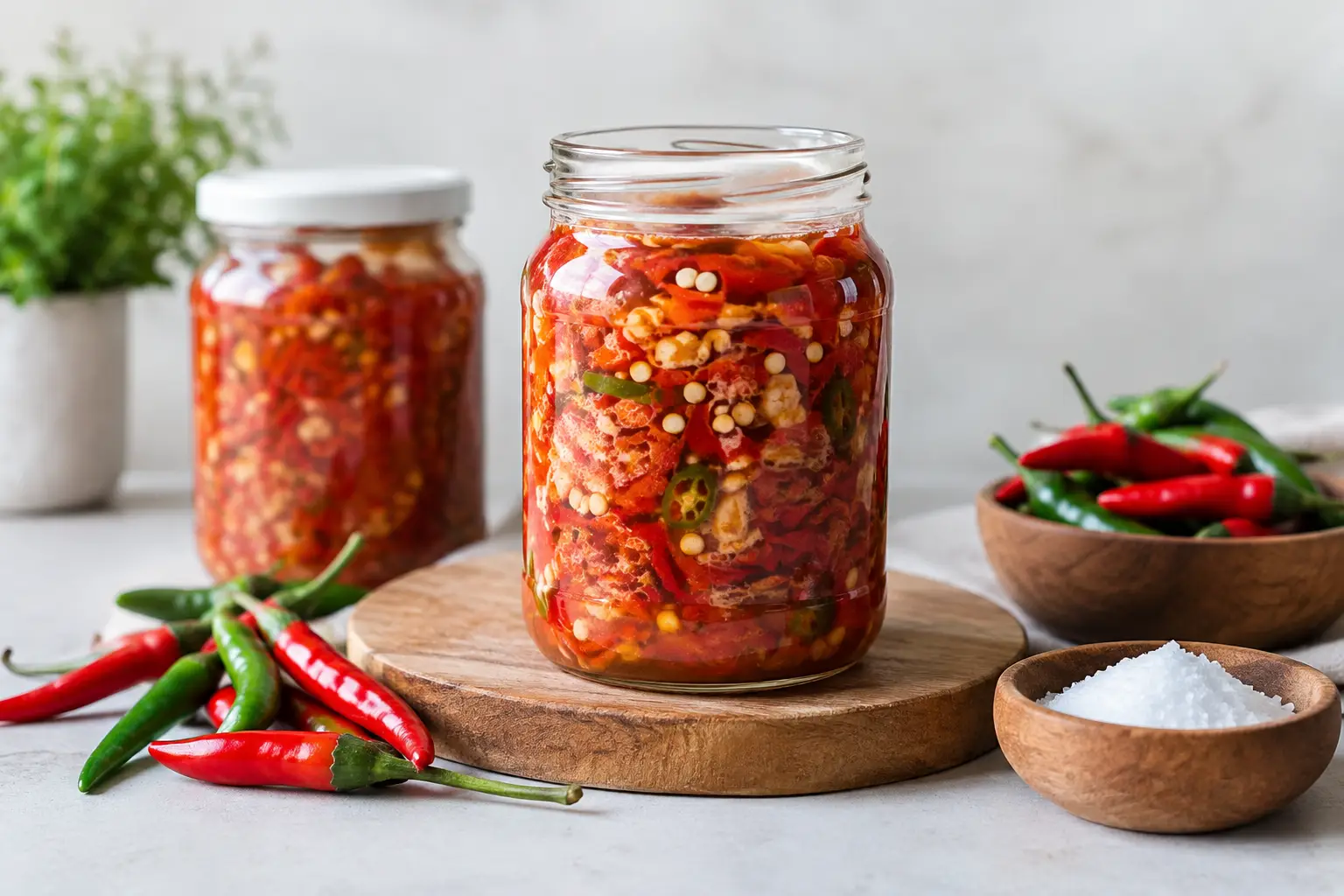
How Chilli Fermentation Softens Heat Over Time
A fresh chilli can arrive loud. First comes the bright fruitiness, then the sting, then a rush of heat that can flatten everything else on the plate. But give that chilli salt, time and the right conditions, and the experience changes. How chilli fermentation softens heat is less about making a chilli weak and more about giving its fire somewhere deeper to go.
The burn is still there. It just stops shouting over every other flavour.
At OOOMAMEE, we give chilli more than 180 days to become something else: tangy, savoury, rounded and properly punchy. Time tastes different.
Heat is not just heat
When people say a chilli is hot, they often mean the immediate feeling: the sharp capsaicin burn that catches the tongue and lingers at the back of the throat. Fresh chillies can be thrilling for exactly that reason. They are green, vivid and direct.
Yet heat is only one part of a chilli. There is sweetness in the flesh, bitterness in the skin, floral notes in some varieties and a surprising amount of fruitiness beneath the fire. In a fast sauce, those details can disappear behind the burn. Fermentation gives them room to show up.
That is why fermented chilli often feels less aggressive even when it still has real heat. Your palate receives more signals at once: salt, acidity, savouriness, fruit and spice. The chilli becomes a flavour rather than simply a challenge.
How chilli fermentation softens heat
The short answer is perception. Fermentation does not magically remove all capsaicin, the compound responsible for chilli heat. A long-fermented chilli can still make your eyes widen. What changes is the way that heat lands.
With salt and time, naturally occurring lactic acid bacteria get to work on the chilli’s sugars. They create acidity, which brings a clean tang and helps preserve the ferment. Meanwhile, the raw, grassy edges of fresh chilli begin to settle. Aromas deepen. The whole mixture becomes more integrated.
That acidity matters. A bright, sour lift can make chilli heat feel cleaner and more controlled, rather than thick or abrasive. It pulls the palate forward after each bite. Savoury notes do the opposite job: they add weight underneath the heat, so the flavour feels anchored.
Think of the difference between biting into a raw chilli and eating a spoonful of a good fermented chilli sauce. The first can be a straight line from fruit to fire. The second has movement. Tang arrives, depth follows, then the warmth builds. It is patient heat.
Day 1: bright, sharp, uncompromising
At the beginning, chilli tastes like itself in high definition. The flesh is fresh and juicy. The aroma is immediate. The heat can feel pointed because there is little else to soften its edges.
This stage has its place. Fresh chilli is brilliant when a dish needs a clean, urgent kick. But it is not yet the deep, layered flavour that holds a pasta sauce together or gives a rice bowl a long finish.
Salt starts the transformation. It draws moisture from the chilli, creates an environment that favours beneficial fermentation and begins changing the texture and flavour from the inside out.
Day 60: tang enters the conversation
After weeks of fermentation, the chilli starts to lose that one-note rawness. Lactic acidity develops, bringing a lively sourness that is not the same as vinegar. It tastes more rounded, more alive and more connected to the chilli itself.
The heat has not disappeared. It now shares the stage with tang.
This is where fermented chilli starts becoming exceptionally useful in food. It can cut through rich cheese, lift slow-cooked meat, sharpen a tomato base or wake up a bowl of rice without turning the meal into a heat contest. A little goes further because it carries more than spice.
Day 120: the flavour gets deeper
By this point, fermentation has had time to build character. The chilli tastes less like a single ingredient and more like a complete seasoning. Fruit notes can become darker. Savoury qualities become more noticeable. The aroma shifts from fresh-cut intensity towards something fuller and more complex.
This is also when heat often feels more measured. Not necessarily lower in literal chilli strength, but less jagged in the mouth. The tang and umami give your palate other things to follow, so the burn becomes part of a longer flavour story.
That distinction matters if you love spicy food but do not want every meal to taste the same. Pure heat can be exciting. Deep heat is craveable.
Day 180+: heat with somewhere to go
At 180 days and beyond, chilli has had time to settle into its full expression. The goal is not to tame it into blandness. The goal is balance with attitude.
A mature chilli ferment can taste bright and dark at once. There is still a lift of acidity. There is still fire. But there is also richness, a gently savoury pull and a finish that keeps calling you back for another forkful.
That is the difference between added heat and developed heat. Added heat sits on top. Developed heat runs through the dish.
For pasta, this means a chilli-tomato sauce can cling to each piece with more than sweetness and spice. It brings tang to cut through richness, depth to make the sauce feel slow-made, and warmth that builds as you eat. With rice, fermented chilli can give familiar ingredients a sharper outline while keeping the bowl comforting.
Why fermented chilli tastes easier to keep eating
There is a reason a well-fermented chilli sauce can feel dangerously moreish. Acidity encourages another bite. Salt carries flavour across the tongue. Umami adds satisfaction. Heat provides momentum.
Together, they prevent palate fatigue. A very hot but flat sauce can become exhausting after a few mouthfuls because every bite delivers the same blunt message. Fermented chilli has contrast. It can start tangy, turn savoury and finish warm. Your mouth stays interested.
It also plays better with other ingredients. Tomato naturally brings sweetness and acidity, so it has a natural affinity with fermented chilli. Creamy elements, cheese, roasted vegetables and rich proteins all benefit from that bright, savoury heat. The chilli does not need to dominate to make its presence felt.
Fermentation is not a shortcut to mildness
If you are looking for zero heat, fermentation is not the answer. The original chilli variety, how much seed and membrane is used, the recipe and the serving size all still matter. A fermented bird’s eye chilli will not become gentle simply because it has waited.
What fermentation can do is make strong heat more articulate. Instead of a sudden burn that blocks the rest of the meal, you get warmth shaped by acidity and depth. The result may even taste hotter to some people at first because the flavour is so vivid. But it is usually less harsh.
That is also why time cannot be faked with extra sugar, vinegar or flavour powder. Those ingredients can create sweetness, sourness or savouriness, but they cannot fully recreate the slow transformation of a chilli ferment. Time builds the connections between flavours.
The best heat does not rush
Chilli fermentation asks for patience, then pays it back in flavour. It turns raw fire into something more complete: bright enough to wake up a dish, deep enough to stay with it, and punchy enough to be remembered.
So the next time a sauce gives you tang before warmth, savour before sting, pause for a second. That chilli may not be quieter. It may simply have had the time to say more.


Comments